Prefer new rows (one period per record), not new columns for each month. Years and months stay data—not schema.
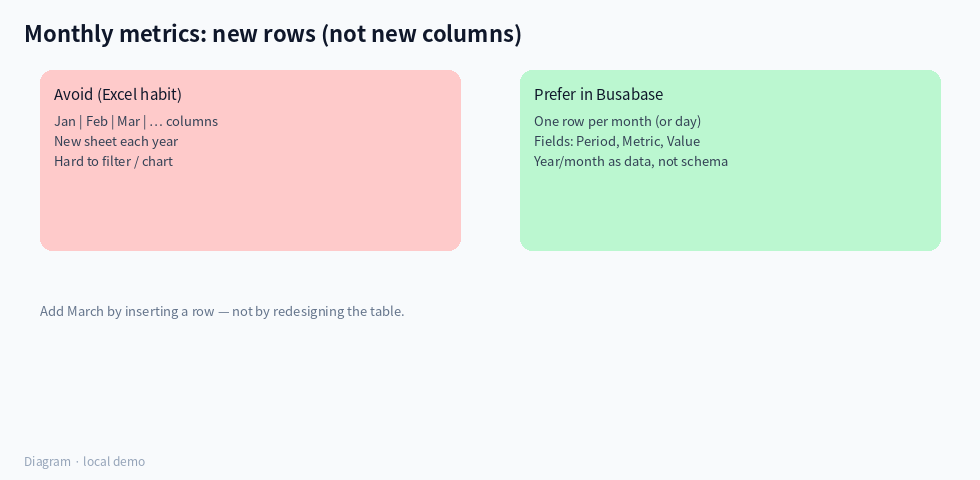
(Diagram: avoid Jan/Feb columns; store period + metric + value as rows.)
Suggested shape
Metrics (or monthly facts) table
- Period (month start date, or year + month fields)
- Metric name (revenue, count, …) or link to a metric definition
- Value, currency if needed
- Optional: entity (customer, product) via link
To add April you insert a row. Charts and filters work on Period instead of hunting Col_Apr.

(Local demo: period and value as ordinary fields.)
How to verify
- Filter
Period within one quarter—you should get three rows per metric, not three columns. - Year-over-year = filter two years and compare values; no new worksheet.
Boundaries
- Wide Excel months-as-columns fight every new year and every new metric.
- If you truly need a crosstab for reading, build a view or export later—don’t freeze that shape into the Base fields.
- Keep “business period” separate from created-time so late entry doesn’t land in the wrong month (see also backfill-date guidance on the forum).
Rows scale; column-per-month does not.
Day-to-day
- Decide the grain (month vs day) once and stick to it in
Period. - Enter or import one row per period per metric.
- Build views: “This year”, “Last 12 periods”, maybe a chart later.
- When finance adds a new KPI, add rows (or a metric type)—not a new column named after the KPI×month.
Prompt you can give an agent
Migrate our spreadsheet that has one column per month into a Busabase table with Period, Metric, Value (and Entity if needed). Map each non-empty cell to one row. Do not create month columns.
That keeps history queryable without yearly redesigns.