I would keep quantity positive and give every stock movement a type. A sale of 5 and a return of 2 then remain easy to read as separate events; the movement type determines whether stock goes out or comes back. Negative quantities alone make reports harder to explain, especially when a damaged return should not re-enter sellable stock.
In Busabase, start with a Products Base and a Stock Movements Base. Each movement links to a product and stores type (sale, customer return, adjustment), quantity, date, original sale or order, condition, and whether returned units were put back into sellable stock. Keep a separate signed stock change for calculations: sale 5 gives -5; a returned 2 in sellable condition gives +2; a damaged return can count as a return without adding sellable stock.
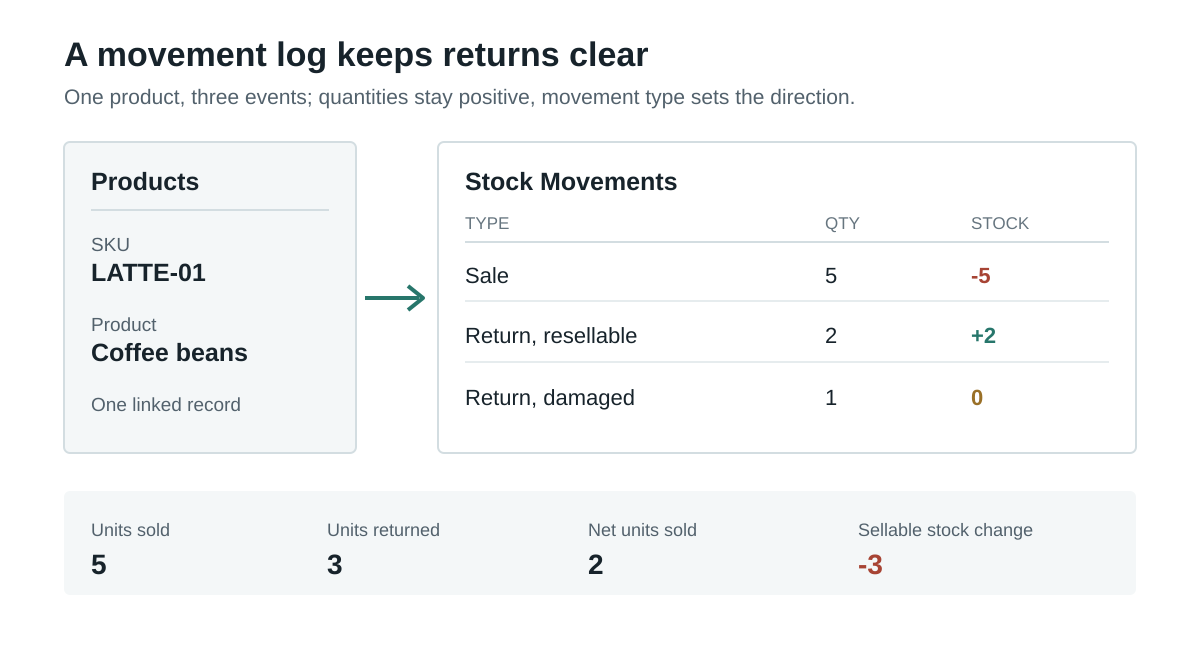
For reporting, count units sold, units returned, and net units sold separately; net sold is sold minus returned. Inventory change answers a different question, so do not use it as your only sales figure. Does your team need to distinguish returned items that can be resold from those kept for inspection or written off?